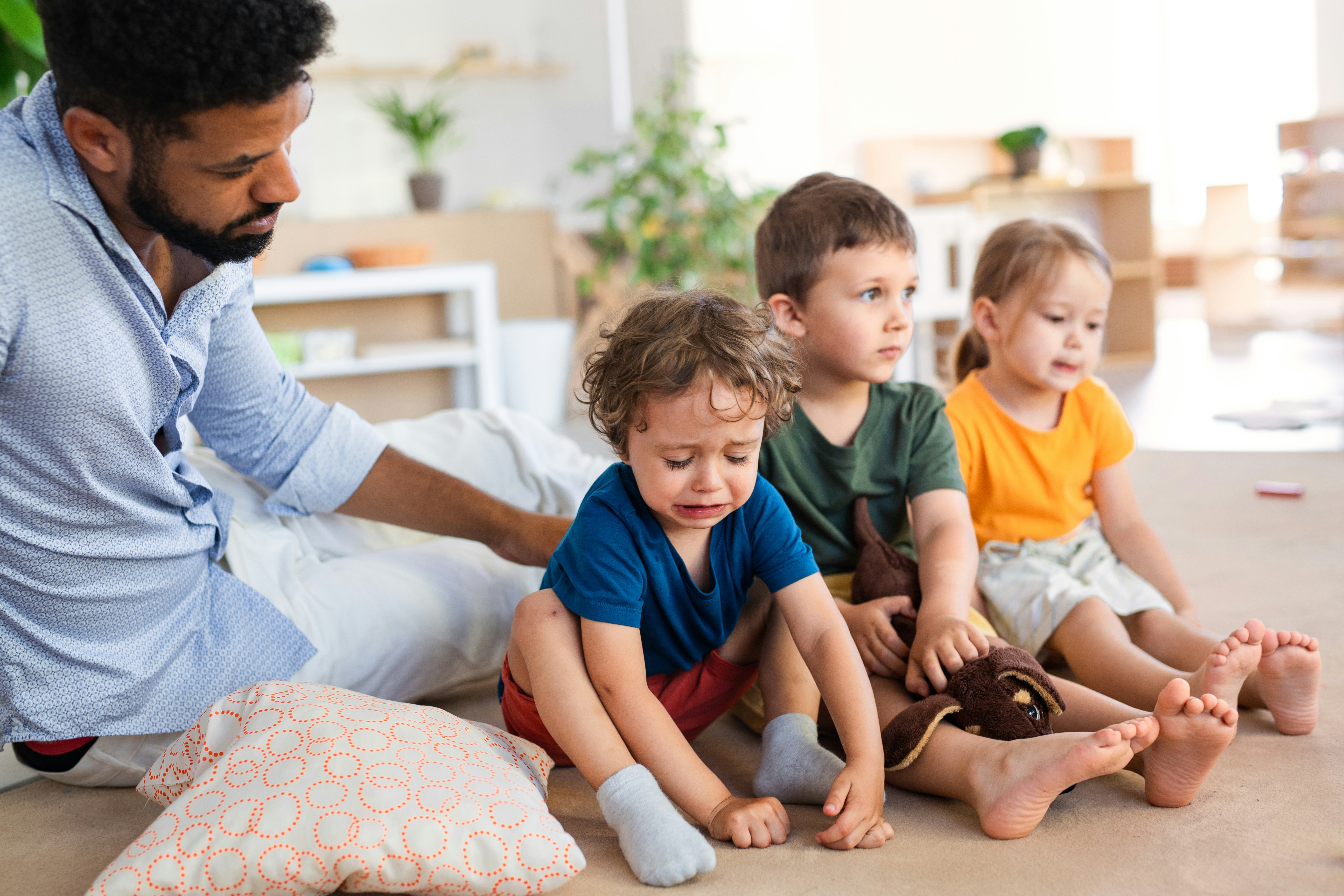
Starting school is a big milestone, and it’s completely normal as a parent to question whether your child is ready for it.
For a lot of families, that doubt could be brought on by worries about letters, numbers, or early reading. But any good teacher will tell you that the things that matter most when children start school are much simpler than that.
Tamariki needs to be able to adjust to new environments, be able to ask for help, and know how to join in with others. Those ‘emotional skills’ are what make the first few weeks of school feel manageable for a young child, and they’re what put the most emphasis on learning at Koru Kids.
What “school readiness” really means
Unlike some other countries, New Zealand's early childhood education system doesn’t base school readiness on a list of academic milestones. Of course, fine motor skills will always be important, but the principles of Te Whāriki mean we focus on the whole child; their confidence, their relationship-building, and their independence.
What that might look like in practice is a child who puts their hand up in class, who tries again when something doesn’t work, or who makes up with a friend after a disagreement. These skills don’t develop overnight, and they’re not taught through formal lessons. They happen over time, with repeated opportunities to practice through play.
Emotional skills that help children settle into school
One of the biggest things that helps children adjust to school is confidence. Not in the sense of being outgoing and getting things right, but a willingness to have a go and see what happens.
Another piece of this puzzle is learning how to handle big feelings. School brings a lot of new challenges, and inevitably, things don’t always go to plan. Children who have had opportunities to practise patience, turn-taking, problem-solving and resilience tend to settle into school more easily than those who haven’t.
Social skills are important parts of school readiness too. Listening, sharing ideas, and navigating conflicts are all part of daily life at kura.
And then there’s independence - managing belongings, following routines, or having a go before asking for help will usually be focus areas in the first year of school, so it’s great if your child has already started learning these skills.
How Koru Kids helps prepare tamariki for school
At Koru Kids Early Learning Centre, every skill we’ve discussed develops naturally in the Pakiki Room (3.5–5 years).
Because we understand the importance of emotional readiness, we create safe situations that allow children to flex these mental muscles. It might be working together to build something out of blocks, sharing ideas and deciding whose to try first, or figuring out how to fix something that didn’t go to plan. To an outside observer, these moments look like play, but they’re full of learning.
Our kaiako stay nearby to provide guidance and support when needed, but give children space to work things out for themselves.
Helping your child with school readiness at home
You’d be surprised at how many opportunities there are for school preparation at home. Start by letting your child take responsibility for small tasks like packing their bag, or setting the table. These mini-moments allow them to practise independence and grow confident in their abilities.
And while it’s absolutely normal to be nervous about school as a parent, do try to be careful of how much of that worry trickles into your little one’s awareness. In our experience, children are amazing at reading emotions, and your worry can quickly become their anxiety. Make a real effort to talk about school in a positive, relaxed way.
Supporting whānau with school transition
Every child approaches the transition to school a little differently. Some charge into the new environment, while others take a bit more time to settle, and that’s okay too. At Koru Kids, kaiako supports children to gain the emotional skills they need to step into their next chapter.
If you’d like to see how our play-based approach helps prepare tamariki for school, you can learn more about our centre or explore frequently asked questions.
Considering signing up and want to see our centre in action? We’d love to show you around - book a visit and visit us in Papatoetoe.